
Tachographs & Splitter Vans
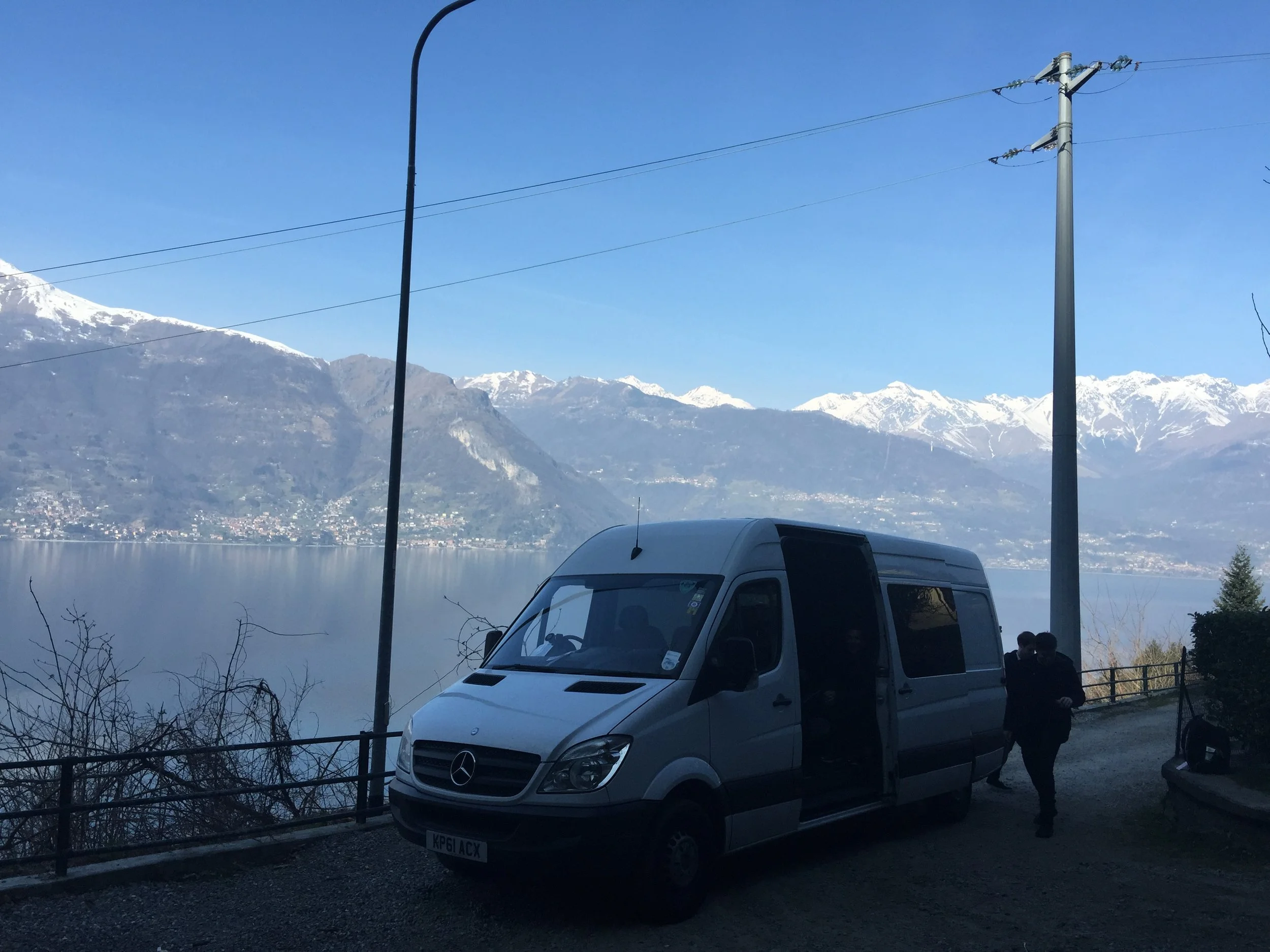
This is a question that has been a bit of a hot topic in recent months as new rules come in to force. Do bands need them? Do drivers? What about when you're in Europe? What about if you're towing a trailer?
This guide is written from my experience as a tour manager working with UK artists in the UK and Europe, and is not intended as legal advice. It just details how I understand things to work in practice, and the rules are subject to change - particularly given the upcoming July 2026 changes to EU regulations which I'll cover below.
If the information contained here is worth anything to you, you can chuck me a tip here.
THE SIMPLE ANSWER:
For a standard 3.5 tonne splitter van carrying a band and their own gear - in the UK or in Europe - you do not currently need a tachograph, as long as you are only moving your own equipment and not carrying goods for hire or reward. The main exceptions are if your van and trailer combination exceeds 3.5 tonnes, or if you are a commercial carrier being paid to transport other people's goods.
A significant rule change is also coming in July 2026 for European touring that is worth understanding now.
What Is a Tachograph?
A tachograph (or "Tacho")is a recording device fitted to a vehicle that logs driving time, speed, distance and rest periods. It exists to enforce "drivers' hours rules", which are the regulations that dictate how long a driver can be on the road before they have to take a break. This is important for heavy goods or passenger vehicles, where a tired driver can cause catastrophic accidents, this is obviously important. If you've been on a tour bus you will already have had experience of scheduling breaks for the driver because of the same regulations.
Hire or Reward?
The confusion largely stems from one phrase: hire or reward.
Following the Brexit Trade & Cooperation Agreement coming into force, there has been a requirement that vans with a MAM of over 2,500kg used for transporting goods for hire or reward in the EU operate with a tachograph and an International Operator's Licence. Because most splitter vans sit at or around 3,500kg MAM, a lot of people read this and assumed it would apply to them.
Hire or reward means you are being paid to transport other people's goods. Think a courier, a removal company, or a haulage operator. If a band is touring in a rental splitter van carrying their own instruments and equipment to their own shows, that is not hire or reward - they are transporting their own goods for their own purposes.
This holds even when a tour manager or driver is being paid to drive the van. Under EU Regulation 1072/2009, this falls under Own Account use, which essentially covers transport that is ancillary to the main business of the undertaking. The goods belong to the artist or their company; the driver is employed by or contracted to that same entity; the journey exists to serve the artist's own business (playing shows), not to provide a transport service to a third party. So no tachograph is needed.
Trailers
HOWEVER If the combined gross weight of your van and a trailer you are towing exceeds 3,500kg, a tachograph IS legally required - in the UK and in the EU - if you're operating for hire or reward.
A standard 3.5t splitter van has a MAM of 3,500kg. Add even a small trailer and the "gross train mass" (the combined weight of vehicle and trailer) will comfortably exceed that. A typical band trailer can weigh anywhere from 750kg to well over a tonne when loaded with backline, and many splitter vans have a towing capacity that gets used right to its limit.
Enforcement for over weight vehicles has been on the rise for a while (see my blog about weight limits for splitter vans). The DVSA has been actively targeting vans and pick-ups towing trailers at the roadside, particularly where the combination would put them into tachograph territory.
What About Driving in the UK Only?
For tours entirely within Great Britain, the rules are somewhat more straightforward right now. Vehicles under 3.5t MAM on domestic roads fall under GB domestic drivers' hours rules rather than EU tachograph regulations. Those domestic rules don't require a tachograph to be fitted, but they do still require you to observe sensible driving and rest limits.
The key domestic rules are:
Maximum driving time of 10 hours per day
No more than 5.5 hours of continuous driving without a break
Changes from July 2026
From 1 July 2026, the EU Mobility Package brings in a significant change to tachograph requirements for international journeys: the threshold drops from 3.5 tonnes to 2.5 tonnes for commercial freight transport and cabotage. Vehicles between 2.5 and 3.5 tonnes used for cross-border hire or reward work will need to be fitted with a second-generation smart tachograph (Smart Tacho 2/G2V2) and their drivers will be subject to full EU drivers' hours rules.
For most touring bands driving their own splitter van with their own gear — because of the own-account exemption discussed above — this change should not directly apply. The hire or reward distinction remains the key test.
However, there are a few scenarios in the touring world where this gets a bit fuzzier:
Merch carriers or production vehicles operated as a separate commercial service — if you have an arrangement where a van is carrying equipment belonging to multiple different clients under a single commercial transport operation, that's a different situation and worth getting specific advice on.
Van hire companies providing driver and vehicle as a package — the legal status of these arrangements, where a company is being paid to transport a band's gear as a service, is worth checking carefully with whoever you're hiring from, particularly for European tours.
Northern Ireland to Republic of Ireland — this counts as an international journey and brings the vehicle within scope of the new rules from July 2026.
The UK Government has confirmed that for vans between 2.5 and 3.5 tonnes operating only within the UK, there is no requirement to fit a tachograph under these new rules — UK domestic drivers' hours rules continue to apply instead. But it's also been noted that the direction of regulatory travel is towards greater oversight of vans domestically too, so this isn't guaranteed to remain the case forever.
This guide covers UK-based artists and touring operations. If you are based in the EU, the regulations work somewhat differently — the principles are similar but the specific rules and how they apply may vary. As always, if you're in any doubt about your specific situation, speak to a transport compliance specialist rather than relying on this idiot.